I. Regulatory Basis & Compliance Necessity
(A) Core Regulatory Basis
●Regulations / Documents: "Regulations on the Safety Management of Hazardous Chemicals", "Measures for the Administration of Hazardous Chemicals Business Licenses", "Work Safety Law", and regulatory requirements from emergency management authorities
●Core Regulatory Requirements:
The state implements a licensing system for hazardous chemicals business operations. No hazardous chemicals business activities shall be conducted without obtaining a license.
Clearly defines application conditions, approval levels, validity periods, change and extension requirements. Unauthorized operations can result in fines of up to 200,000 RMB.
Hazardous chemicals business enterprises must have safety conditions, safety management systems, certified personnel, and emergency response plans. Operations involving explosive precursors, precursor chemicals, and highly toxic chemicals require additional special approval/filing.
(B) Scope of Applicable Enterprises
1. Hazardous chemicals trading companies, wholesale enterprises, supply chain companies
2. Chemical, pharmaceutical, new materials, electronics, coatings, and reagent enterprises
3. Enterprises engaged in hazardous chemicals storage, wholesale with storage, or paper trading without storage
4. Enterprises involved in import/export, cross-border trade, or third-party logistics of hazardous chemicals
5. Enterprises requiring additional scope for explosive precursors, precursor chemicals, compressed gases, flammable liquids, etc.
(C) Legal Consequences of Unauthorized Operations
1. Administrative Penalties: Order to stop operations, confiscate illegal gains, and impose fines of 100,000 - 200,000 RMB
2. Business Suspension: Unable to purchase, sell, declare customs, or issue invoices
3. Supply Chain Disruption: Suppliers refuse to deliver, customers refuse to accept, logistics companies refuse to transport
4. Criminal Liability: Serious circumstances or safety accidents may result in criminal charges for illegal business operations
5. Credit Sanctions: Inclusion in work safety dishonesty list, affecting financing, bidding, and qualification applications
II. Core Information & Classification of Hazardous Chemicals License
(A) Basic Certificate Information
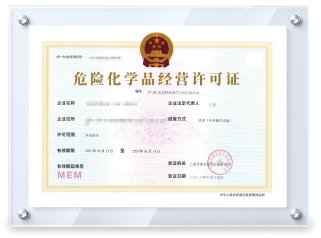
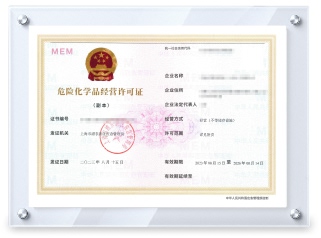
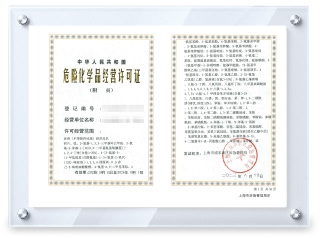
●Certificate Name:Hazardous Chemicals Operating License
●Issuing Authority:Emergency Management Bureau (district/county/city level based on business scope)
●Validity Period:3 years, must apply for extension 3 months before expiration
●License Scope: Clearly specifies the categories of hazardous chemicals (flammable liquids, oxidizers, corrosives, etc.)
(B) Two Major Business Types (Key Differences)
1. License without Storage (Paper Trading)
oApplicable: Pure trading, transfer, invoicing, supply chain management
oFeatures: Requires office address + optional storage lease agreement
oApproval: Relatively fast, simple verification
2. License with Storage
oApplicable: Own warehouse storage, wholesale distribution, filling and packaging
oFeatures: High requirements for premises, fire protection, security, dual-control system, and emergency response plans
oApproval: On-site verification, expert review, fire safety inspection required
(C) Core Application Conditions
1. Entity Qualification: Business license with scope including "chemical products" or related terms
2. Personnel Requirements:
oPrincipal responsible person and Safety management personnel, 1 each. Some regions also require frontline employees
oMust participate in safety training and pass examinations to obtain safety qualification certificates
3. Premises Requirements:
oWithout storage: Provide real office address + formal storage hosting agreement
oWith storage: Must meet fire protection, explosion-proof, anti-seepage, security, and monitoring standards
4. Documentation Requirements:
oSafety management systems, operational procedures
oDual-control system report, emergency response plan with filing
oEmergency drill records, risk identification documents
5. No Violation Records: Enterprise and responsible persons must have no major safety accidents or dishonesty sanctions
III. Complete Application Process
1. Pre-Diagnosis & Program Development
●Determine business mode: With/Without storage
●Determine license scope: General hazardous chemicals / explosive precursors / precursor chemicals / compressed gases
●Verify gaps in personnel, address, and systems
●Assess approval difficulty, clarify timeline and required documents
2. Personnel Training & Certification
●Register for safety management personnel, principal responsible person training and examination
●Training and examination for relevant personnel
●Complete personnel information filing to meet approval requirements
3. Premises & Documentation Improvement
●Without storage: Requires compliant registered address
●With storage: Warehouse fire protection, security, monitoring, ventilation, and anti-seepage must meet requirements
●Prepare complete documentation: systems, ledgers, risk identification, dual-control report, emergency response plan
●Complete expert review + filing for emergency response plan
4. System Declaration & Document Submission
●Online submission through Emergency Management Bureau approval system
●Submit complete paper documents: application form, personnel certificates, address proof, systems and plans, etc.
●Track review progress and address correction requests promptly
5. On-Site Verification & Expert Review
●Simulate verification in advance and address all issues
●On-site inspection by Emergency Management Bureau
6. Approval & Certificate Collection
●Collect Hazardous Chemicals Operating License (original and copy)
●Complete business scope change with industrial and commercial authorities
●Provide guidance on subsequent precursor chemical filing, special accounts, and other extended services
7. Extension & Change Services
●Initiate extension process 3 months before expiration
●Full agency service for changes in enterprise name, address, legal representative, and business scope
●Annual maintenance, inspection response, and document updates
IV. Key Supervision & Common Misconceptions
(A) High-Frequency Inspection Points
1. Whether operating with valid license, and whether operating beyond scope
2. Whether safety management personnel are certified and on duty
3. Whether business address is genuine and storage is compliant
4. Whether dual-control system and emergency response plan are complete and filed
5. Whether special filing completed for explosive precursors/precursor chemicals
6. Whether ledgers, systems, and drill records are complete
(B) Common Misconceptions
1. Misconception: Trading without inventory doesn't require a license Correction: All hazardous chemicals purchase and sale operations, regardless of storage, require a license
2. Misconception: Can use others' addresses for the license Correction: Address must be verifiable; false addresses result in rejection and inclusion in abnormal list
3. Misconception: Certificate is permanently valid once obtained Correction: Valid for 3 years, must extend before expiration, expires automatically if not extended
4. Misconception: License allows selling explosive precursors/precursor chemicals Correction: Requires additional scope in license + separate public security/emergency filing, both required
5. Misconception: Can pass with purchased online documents Correction: Must cooperate with on-site verification and actual personnel training; document fraud results in immediate rejection
V. Core Advantages of Sindbad Services
1. High Approval Rate: Years of experience in hazardous chemicals licensing, familiar with standards of local emergency bureaus, leading one-time approval rate in the industry
2. Fast License Issuance without Storage: No need for own warehouse, provide compliant solutions, short cycle, low cost
3. Full Documentation Service: Complete package including systems, dual-control, emergency plans, training, and filing; enterprises only need to cooperate
4. Accompanied On-Site Verification: Pre-verification rectification, on-site guidance, avoid rejection due to minor issues
5. Flexible Scope Expansion: Can handle flammable liquids, corrosives, oxidizers, explosive precursors, compressed gases, etc.
6. One-Stop Follow-Up Services: Complete package including license + precursor chemical filing + explosive precursor account + emergency plan + dual-control + SDS labels all included
VI. Frequently Asked Questions
Q1: Can I apply for a hazardous chemicals license without a warehouse?
A: Yes. Apply for license without storage (paper trading)
Q2: How long does it take to obtain the license?
A: Typically 15-25 working days for non-storage; approximately 1-2 months with storage, varies by region.
Q3: How to extend an expiring license?
A: Submit extension application 3 months before expiration. Re-verify personnel, address, systems, and emergency plans.
Q4: Can one company have multiple licenses?
A: No, one license per enterprise. Multiple business categories can be added to the same license.
Q5: What additional requirements for explosive precursor chemicals?
A: Need to add explosive precursor scope to the license first, then complete explosive precursor filing + special account with public security authorities.
Q6: Can individuals apply for the license?
A: No, only corporate entities can apply. Individual businesses are not eligible.